
“Through all of my successes and failures, I’ve learned that everything you do is a creative act. And that is great. You don’t need to be a well known novelist to be a writer.”
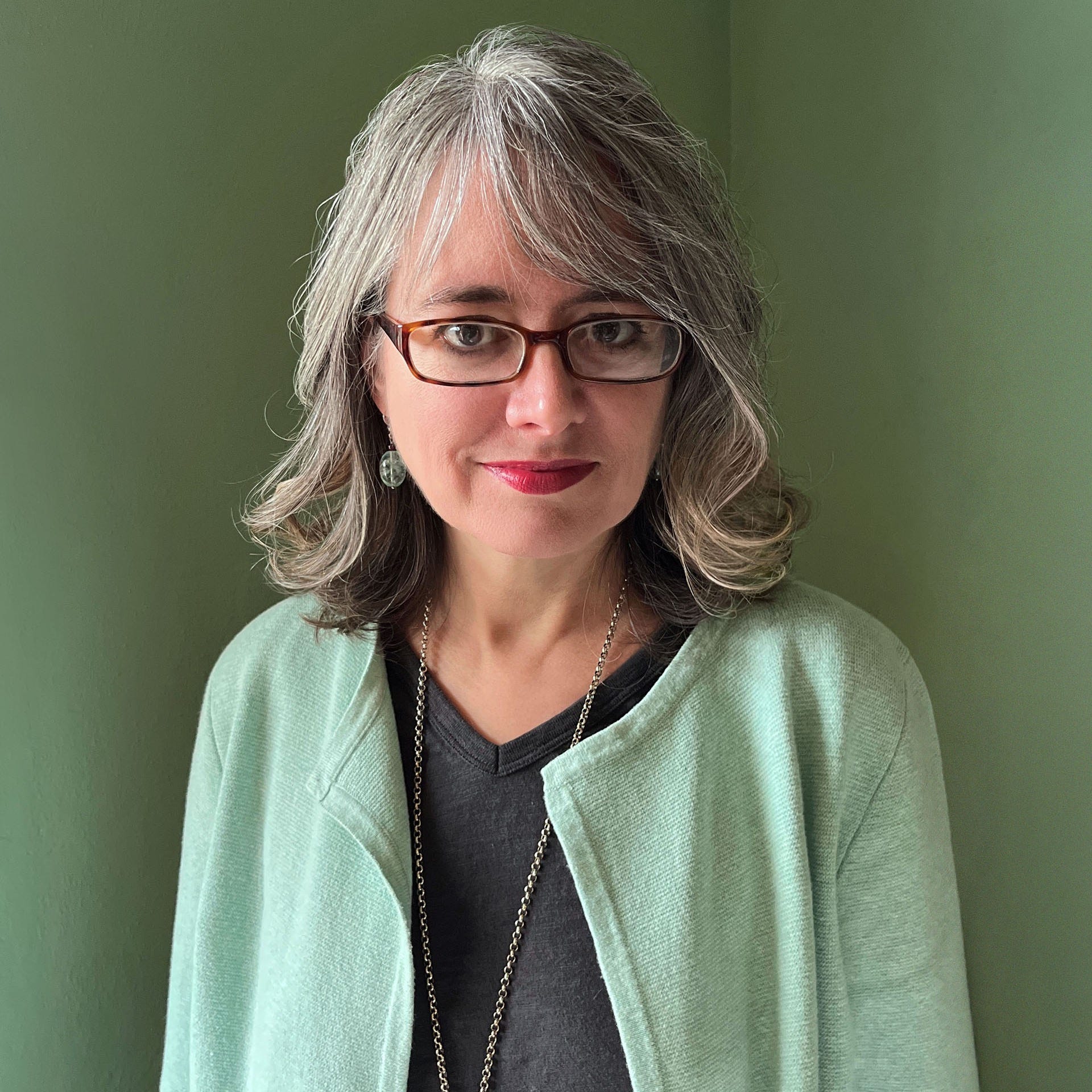
That’s what Gigi Little said when I sat down with her to talk about writing, book designing, and her creative process.
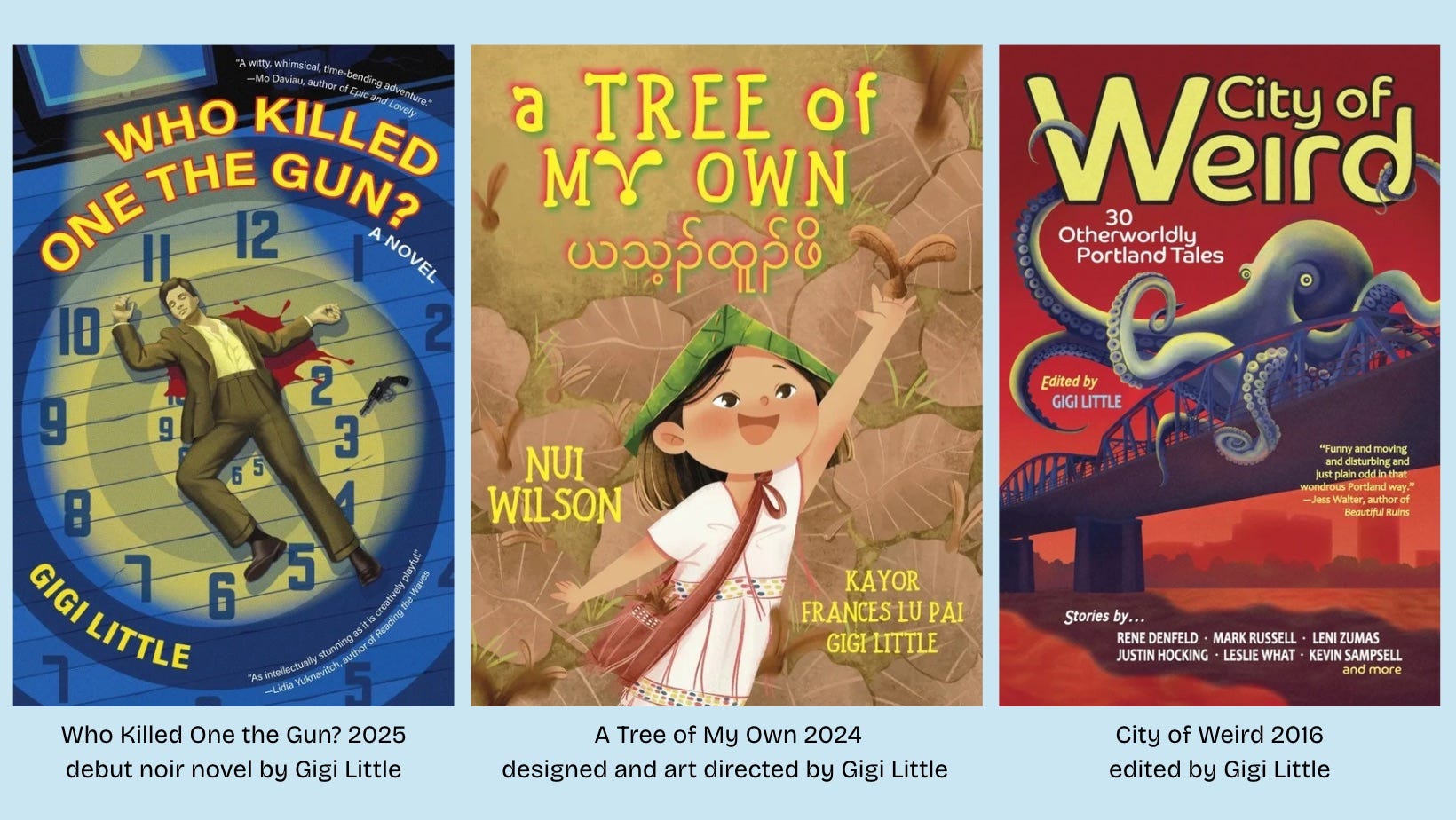
Gigi, a Portland creative, has had two significant book anniversaries this month: the tenth anniversary of the anthology she edited, City of Weird: 30 Otherworldly Portland Tales, and the one-year anniversary of her debut noir novel, Who Killed One the Gun?
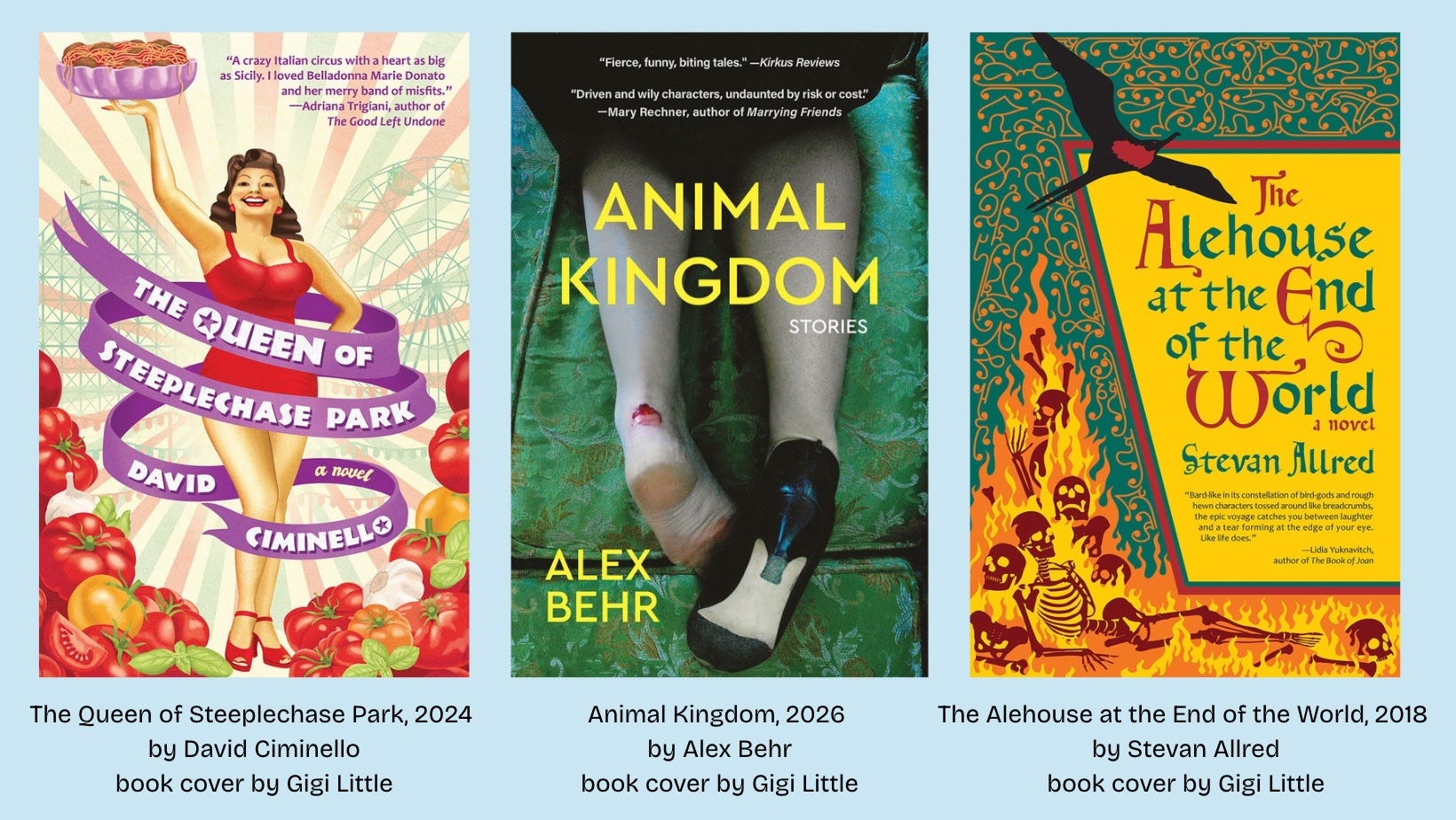
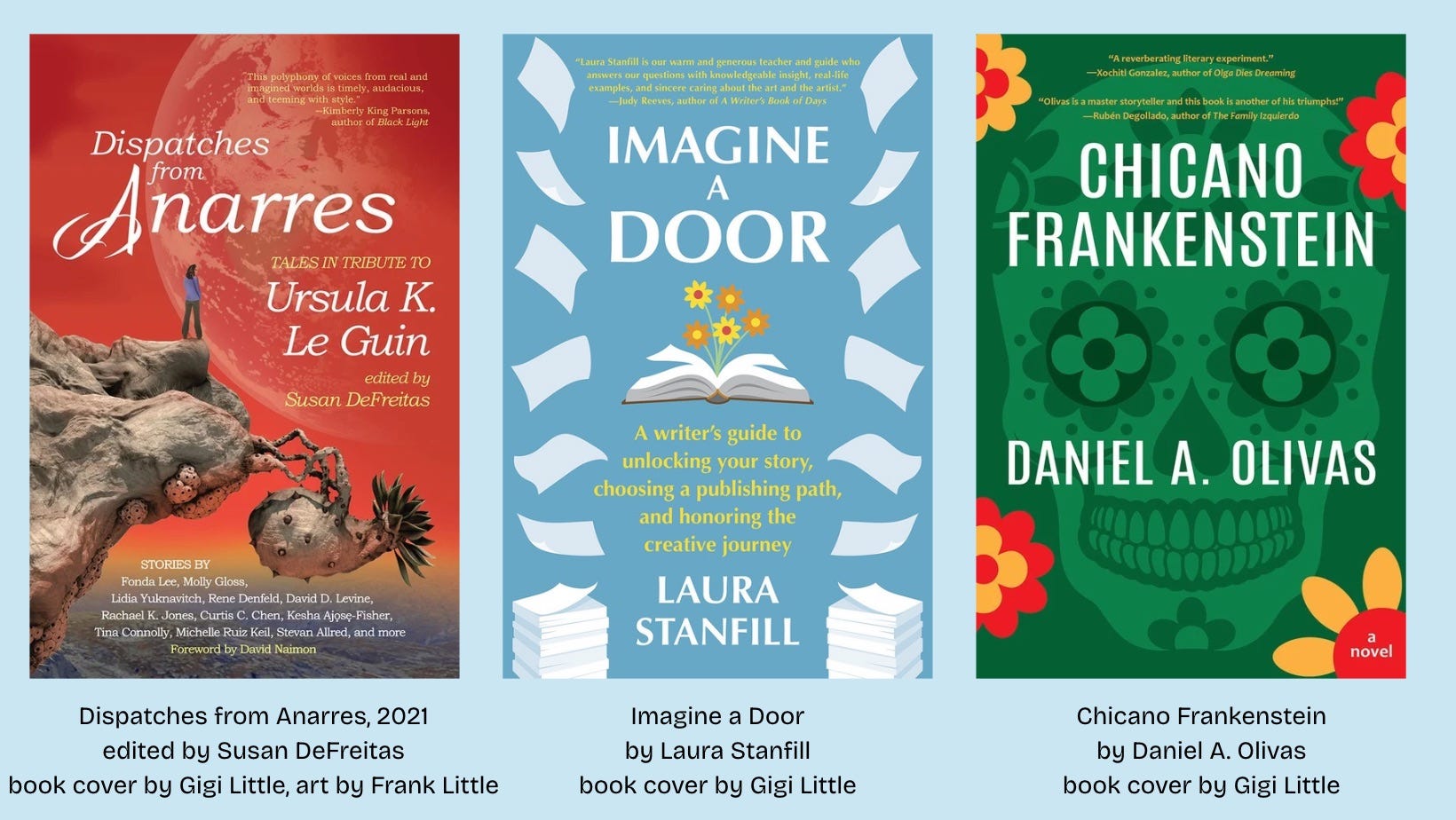
Her world revolves around books, not only as a writer, but also as a book designer and as a Marketing Coordinator at Powell’s Books. She has designed book covers for over eighty books, including the award winning children’s book A Tree of My Own.
What is Creativity?
Gigi sees creativity as a wide topic. Its meaning can change from person to person and from art form to art form.
When she designs a book cover, it’s about discovery. Gigi said that she thinks conceptually rather than visually, so design begins with a concept, either one she has come up with herself based on the project or one that a client gives her. Then she goes into the Illustrator program and plays with design elements. She moves them around. And as she builds the design, she finds what it wants to be.
“Writing is different,” she said. “For me, it feels more creative.” Stories have so many layers—the plot, the setting, the characters, even the themes. There is what you want the overall story to say and how the words come together on the sentence level. “And all these different layers are creative in different ways.”
What creativity means may differ from person to person, but it still has a universal impact. Creativity helps us in difficult times even when we face dark headlines in the newspapers or tragedy in our own lives.
Gigi said, “For me, creativity lets me problem-solve in a way that occupies my brain. It makes it so much easier to take the sad stuff and put it aside.”
Writing Out Loud
Writing a first draft is hard. All writers know this, and well-meaning advice-givers tell us, “Don’t stop to edit your first draft as you write it. Just get the words on the page. Editing comes later.” But it’s all too common for our inner-editors to take over and block the free flow of ideas.
Gigi said that when she sits down to write, all she wants to do is perfect, perfect, perfect. “And that need to perfect my sentences gets in the way.”
Though she doesn’t have a set way to begin a new writing project, recently she found that brainstorming verbally helps. She tells her story to herself and records it on her phone. Then she sends the audio to herself and reads the voice-to-text. The sentences in that text are really bad, but the ideas are there. Then she’s ready to write.
Perhaps this works because her writing has always been voice based. She said, “I do a lot of writing out loud. I constantly hear myself saying the words as I write them, especially when I wanted the specific noir-radio sound in my novel, One the Gun.”
Book Cover Challenges
Gigi said, “When you design a book cover, you are the last person you need to make happy.”
Every time she designs a book cover, she collaborates with her author client. There’s a give and take that requires her to balance what her client wants with her professional knowledge of what will work for the book and help it sell. In the end, though, she wants to create a book cover that the author loves.
Gigi admitted that it can be difficult to give someone what they want, but she likes that challenge. She enjoys many of the struggles that come with book design, partly because every design project teaches her something new, but also because she loves challenges.
“Even if I’m beating my head against the wall, saying, ‘why isn’t this working,’ there’s still a certain amount of glee because the challenge underneath it all is fun.”
Dreams and the Dread of Failure
Gigi told me that she always wanted to be a writer. As a child she loved many art forms, including music and drawing, but she always wanted to write books. Like all writers, she dreamed of getting published, yet her first publishing experience didn’t meet her expectations.
This was years ago, before Gigi moved to Portland, when she was on the road with a circus. Yes, that’s right. Before becoming a writer and book designer, Gigi ran off to join the circus. She spent fifteen years on the circuit, most of that time as a clown. She says she wasn’t a very good clown. She thinks she’s a funnier writer than performer.
Between performing and traveling, she wrote picture books, two of which got published by a small press. Gigi said that when she found out how small the press was, she thought she had failed. In her mind, it was as if she hadn’t gotten published at all. Only getting published by one of the big five counted, or so she thought. She has since realized how wrong she was.
“You’re not less and your book is not less if it’s not one of those big bestsellers that’s on lists or winning awards.”
It’s a hard lesson to learn. All along the way, writers experience micro-failures. They fail when they struggle to put words on the page. They fail every time an agent or editor rejects their work. Even those lucky enough to get their work published often consider themselves failures when their books don’t sell as much as they had hoped. Gigi has seen these disappointments too often among her fellow writers and clients whose book covers she designed.
Gigi told me that micro-failures make writers forget their successes. “And the success we forget the most is the one we should remember the most. We wrote the book. We actually wrote it!”
When her debut full-length novel came out last year, Gigi told herself that she would love everything that happened with the book. She did go through periods of thinking, “Everybody’s going to hate it. Nobody’s going to care.” But she told herself to stop. Rather than give in to the constant sense of failure, she decided to let it be a good experience. “The good experience can’t just happen. You have to actively make that space for it in your brain.”
Upcoming- Steve’s Book
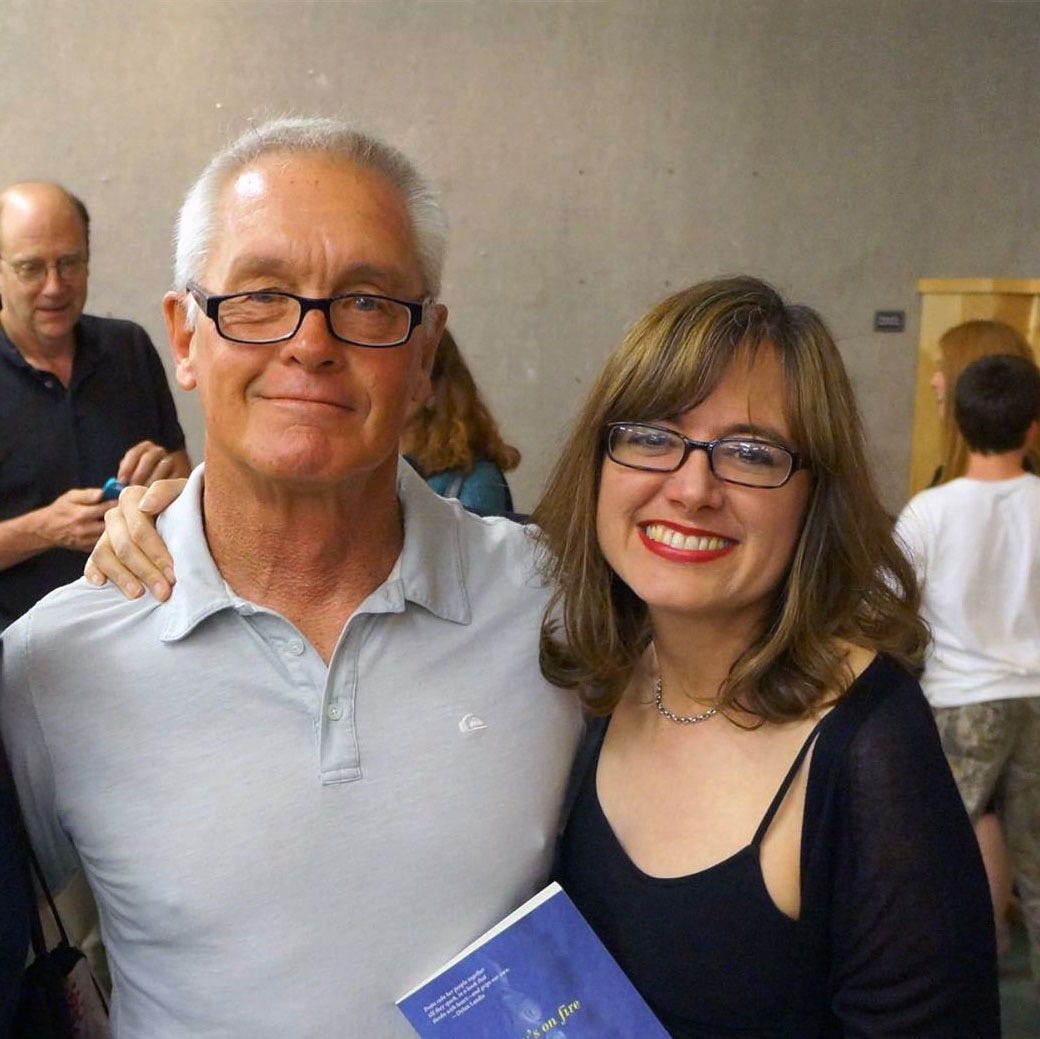
Earlier this year, our mutual friend Steve Arndt passed away after a long battle with cancer and heart disease. Steve was the ambassador of the literary community in Portland. He showed up at readings, met with countless writers for coffee to talk about writing, and organized Portland’s annual Writers Picnic. He and Gigi both studied “Dangerous Writing” with Tom Spanbauer and were extremely close friends. I would often see them sitting together in the front row at local book readings.
In the last few years of his life, Steve worked with Gigi to assemble excerpts of his writing into a collection. Not a novel. Not a poetry collection. Not an essay collection. “It’s an odd format,” Gigi said, “but it’ll make a worthwhile book.” While he was in the hospital, they chose a title for the collection, and Gigi designed a cover. The book is not out in the world yet, but Gigi wants people to know that it is going to happen. “His voice is going to be out there.”
Well, I love this, Gail. Thank you for bringing Gigi's zest for creativity, and her talent, out into the open. And oh, am I curious about what title dear Steve's book will have! 💚
What a great chin-wag with a brilliant literary creative!